



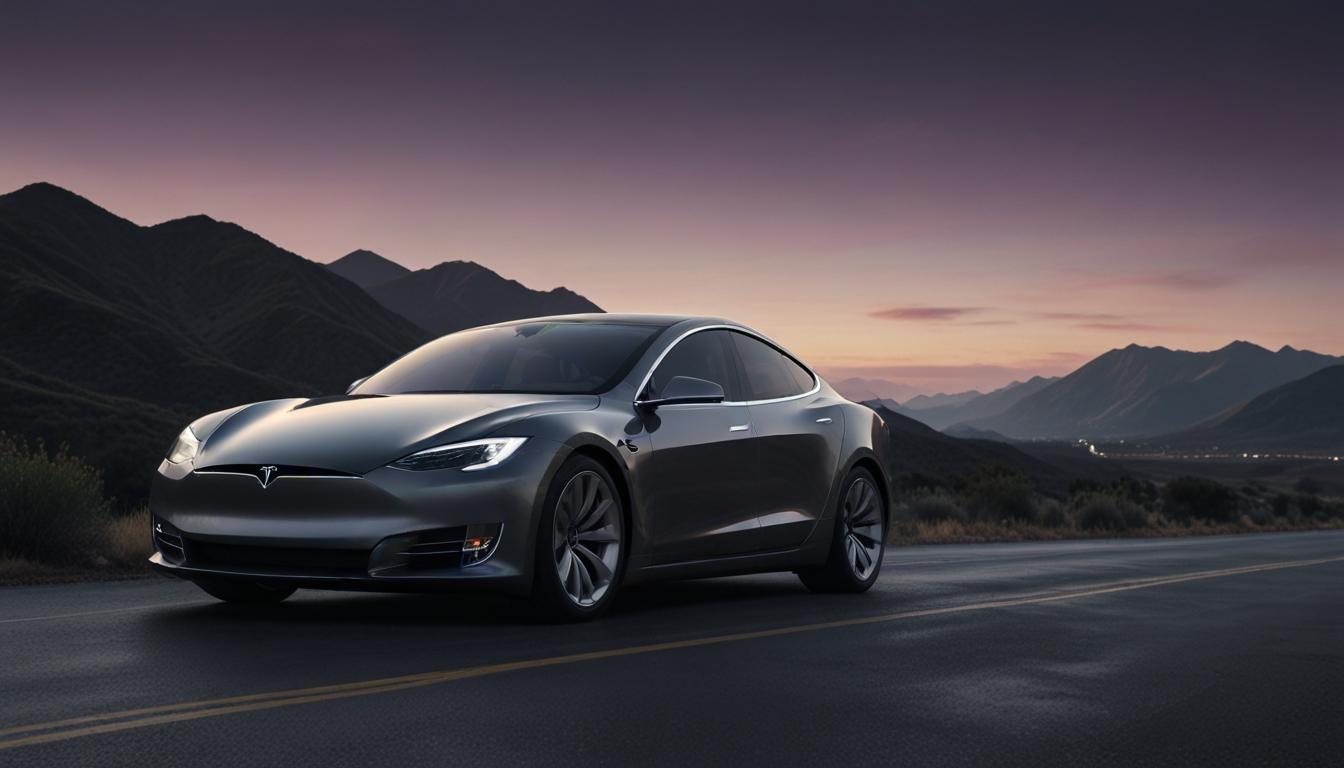


Tesla is making strides in implementing Full-Self Driving (FSD) technology in China through a partnership with Baidu to upgrade its mapping software. The new lane-level navigation services provided by Baidu aim to improve safety for Tesla vehicles by offering detailed guidance and precise lane recommendations.
Tesla is progressing toward launching Full-Self Driving (FSD) technology in China following an agreement with Baidu to enhance its mapping software. Baidu, a leading Chinese tech company, announced on Saturday that it will provide lane-level navigation services for Tesla vehicles. This navigation improvement offers detailed guidance, including lane recommendations before turns, aiming to enhance safety.
During Tesla CEO Elon Musk’s April visit to China, experts noted that reaching a mapping and navigation agreement with Baidu was essential for government approval of Tesla’s FSD software. Baidu has been offering mapping services to Tesla since 2020, but these were limited to road-level data, which is less precise than the newly introduced lane-level navigation.
Earlier, Tesla released a software upgrade for urban users in China, marking the first time such detailed road information is available. Tesla’s existing driver-assistance system, Autopilot, is available in China, but the more advanced FSD feature is not yet offered.
China’s regulations require all self-driving systems to have mapping qualifications to operate on public roads, necessitating partnerships with licensed local firms. Baidu’s mapping credentials enable Tesla’s vehicles to collect and utilize real-time road data, potentially accelerating the global development of autonomous technologies.
Tesla’s previous mapping services, also provided by Baidu, had received criticism from car owners. The new upgrade aims to address these concerns. The announcement led to positive responses on Chinese social media, with users expressing relief that they may no longer need to rely on mobile phone maps.
The introduction of FSD could boost Tesla’s revenue in China, where the company recently reduced car prices to counter slowing demand and rising competition in the world’s largest car market.